Travelling from Sokoto to Zamfara State in northwestern Nigeria, plastic waste is impossible to ignore – bags snagged on acacia branches, water sachets choking roadside drains, uncollected refuse piled at the edges of towns and even farmlands. This sanitation problem, seen through a food system’s lens, reflects a broader national challenge. Plastic pollution is a persistent threat to Nigeria’s food systems, public health, and economic development.
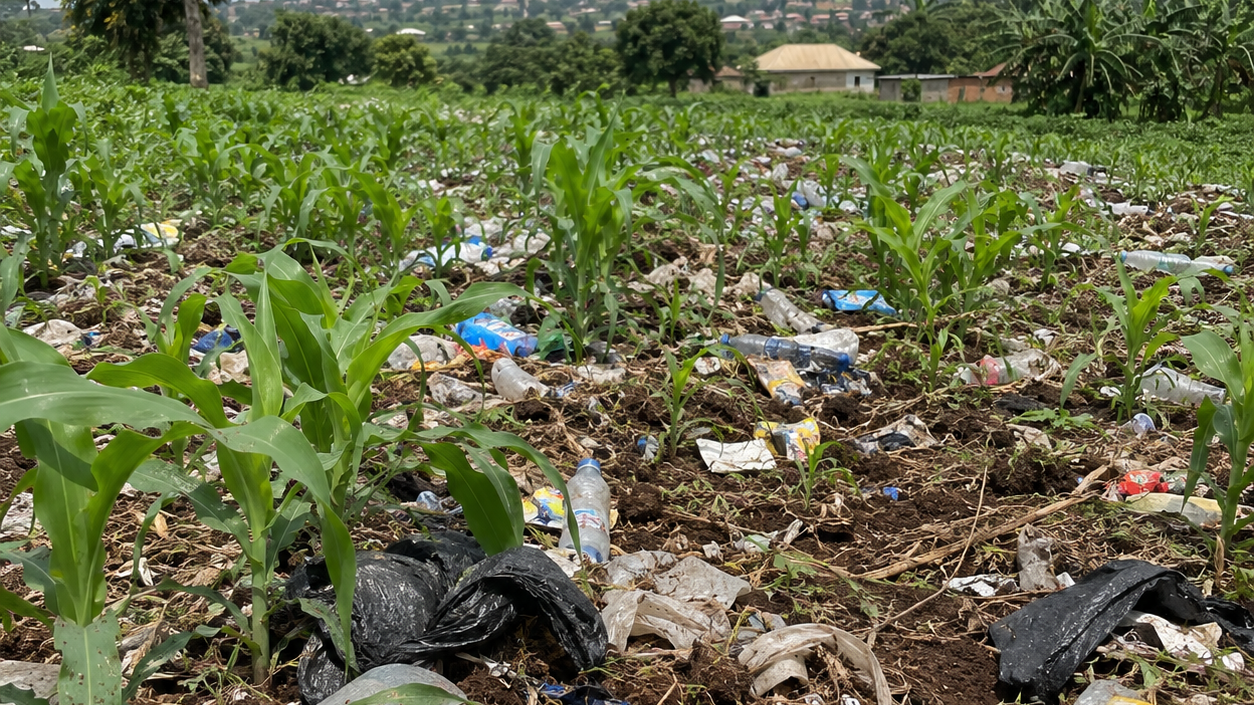
Caption: Plastic waste scattered across farmland
Nigeria generates an estimated 32 million tons of solid waste annually, one of the highest totals in Africa, with plastics accounting for around 2.5 million tons of that figure. Daily per capita waste generation is approximately 0.79 kg per person, slightly above the West African average. Less than 12 percent of plastic waste is recycled, with the remainder ending up in landfills, dumpsites, or the open environment. Urban centers alone produce over 66,000 tons of waste daily, a figure projected to nearly double by 2040 as cities expand. These are not merely waste management statistics. They describe the scale at which non-degradable material is entering, and disrupting, Nigeria's food and farming systems.
When plastics enter circular agricultural systems
In many parts of northern Nigeria, farmers rely on forms of organic circularity, including the use of crop residues as mulch, manure, feed, or exchangeable inputs. Stalks are traded between farmers and pastoralists. Household waste is sometimes repurposed as ash-based fertilizer. These practices are adaptive, low-cost responses to declining soil fertility and rising input costs, and they work precisely because every input has a productive destination.
Plastics should have no place in this system. Nylon bags and sachets do not decompose, do not enrich soil, and do not feed livestock. Instead, they accumulate. They clog drains and contribute to flooding that cuts off farm-to-market roads and erodes rural infrastructure. They contaminate rivers and irrigation canals that supply water to crops and livestock. When burned (i.e., the default disposal method in communities without formal waste collection) they release dioxins and other toxins that heighten respiratory risks.
Microplastics are being detected in agricultural soils and emerging research suggests that their effects can include changes in soil structure and water management. Their implications for crop productivity and potential transfer through food chains remain areas of active research. Plastic pollution, in this sense, is a risk multiplier, amplifying existing vulnerabilities across agriculture, water security, and public health simultaneously.
The politics of the low value nylon economy
The nylon bag is one of the most visible faces of Nigeria's plastic crisis. Cheap, lightweight, and disposable, it is ubiquitous, from open markets across the nation. Its very low material value is precisely what makes it so difficult to address: there is no economic incentive to collect, sort, or recycle it. Instead of feeding into formal or informal recycling chains, used nylon bags become open-air refuse. The underlying problem is that the private value of collecting the nylon bag is often lower than the social value of keeping it out of drains, waterways and agricultural land.
Because plastics cross geographic and sectoral boundaries with ease - carried by wind, water, and trade routes - addressing them requires national coordination that has so far proved elusive. The consequences, however, are not shared equally.
A gendered burden
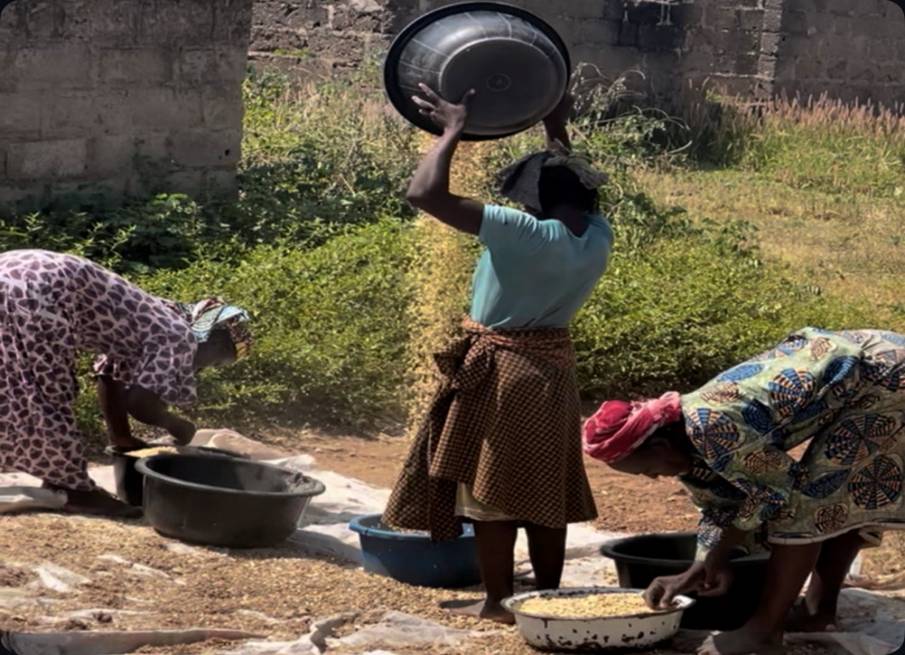
Evidence across Africa suggests that women carry a disproportionate share of the labor associated with managing plastic pollution, and similar patterns are visible in Nigeria's agricultural and waste sectors. Women often sort crop residues, manage compost, and process feed, while men are more likely to control sales and transport. When plastics enter these systems, women absorb additional unpaid labor: clearing contaminated waste, separating non-degradable materials from organic inputs, or burning refuse with significant health costs and no commercial return. Any transition toward a genuinely circular economy must redistribute these burdens deliberately, not replicate existing inequalities in a greener form.
Policy momentum, fragmented execution
Nigeria has begun to act. In August 2024, the Federal Executive Council approved a ban on single-use plastics across all federal ministries, departments, and agencies. Lagos State followed in 2025 by beginning full enforcement of restrictions on specified single-use plastics, including lightweight nylon bags and other disposable items. These are meaningful steps. But enforcement gaps are wide. Institutional capacity for monitoring and compliance remains thin. Enforcement remains uneven across states. Nigeria lacks a consistently implemented framework that aligns national, state, and local responsibilities, while waste collection rates nationally remain critically low. Private sector innovation is taking root – companies including Polysmart Packaging, Wecyclers, and BonnieBio are developing recycling incentives and biodegradable alternatives, and the Food and Beverage Recycling Alliance is advancing standards for recycled content – but these efforts are still small relative to the scale of the problem.
The international evidence is instructive. Rwanda's 2008 ban on plastic bags, paired with community enforcement and accessible alternatives, contributed to significant reductions in visible plastic-bag pollution. Kenya's strict penalties on manufacture and distribution have reshaped market behavior. Ireland's plastic bag levy reduced consumption by over 90%. These cases suggest that bans are most effective when they are supported by clear institutional responsibilities, affordable substitutes, enforcement, and public communication—conditions that remain uneven in Nigeria.
What needs to happen
Nigeria needs harmonized national standards and effective enforcement of Extended Producer Responsibility schemes across states, not just stronger commitments on paper. It needs consistent, disaggregated data on waste generation, microplastic contamination in soils and food systems, and lifecycle assessments of alternative materials to ground policy decisions in evidence rather than intention.
Critically, it needs to formally integrate the informal waste sector into policy design. Waste pickers, many of which are young people, already perform an unrecognized but essential role in Nigeria's recycling ecosystem. Any transition strategy that ignores their livelihoods will both fail on equity grounds and lose the operational knowledge embedded in the informal sector.
Above all, plastic pollution must be repositioned in Nigerian agricultural policy, not as a sanitation footnote, but as a direct threat to the circular systems on which food security depends. The window to act before waste volumes double again is narrowing. The cost of inaction will be measured not only in contaminated soils and blocked drains, but in the erosion of the adaptive farming practices that millions of Nigerians have relied on long before plastic entered the picture.
By: Chibuzo Nwagboso and Oliver Kirui