By: Oliver Kirui, Chibuzo Nwagboso, Adetunji Fasoranti, Olufemi Popoola, Opeyemi Olanrewaju, Hyacinth Edeh, Temilolu Bamiwuye, and Amina Bashir-Yakubu
Nigeria is developing a ten-year plan to transform its agrifood system. Before finalizing targets, stakeholders across 36 states were asked what stands in the way. While many answers were similar, important regional differences emerged.
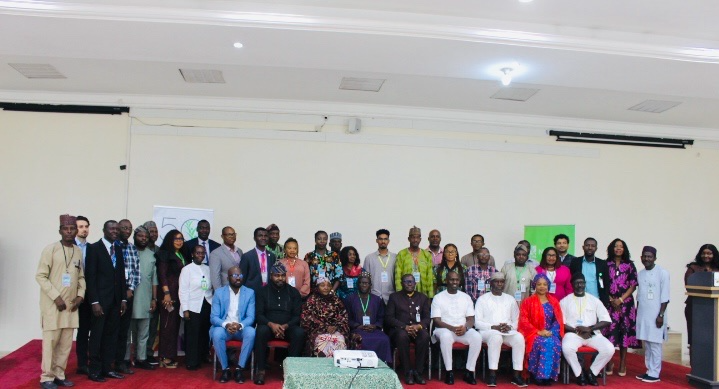
Photo credit: Adetunji Fasoranti
By 2035 Nigeria will be home to well over 230 million people. Feeding the population while lifting millions out of poverty is the defining test of the country's agrifood system. These considerations underpin the Comprehensive Africa Agriculture Development Program (CAADP), and its latest continental commitment, the African Union's Kampala Declaration. Adopted in 2024, Kampala is Africa's framework for transforming food systems over the decade to 2035, organized around six strategic objectives and 22 measurable targets, from a 45 percent rise in farm output to halving post-harvest losses and ensuring 60 percent of people can afford a healthy diet.
Nigeria is now turning that continental promise into a national plan, the CAADP Strategic Action Plan 2026–2035. To inform this process, IFPRI Nigeria and the Federal Ministry of Agriculture and Food Security conducted a series of consultations between May and June 2026. The consultations provide a grounded view of both shared challenges and region-specific priorities.
How the consultations worked
Six regional workshops covering all the geopolitical zones and all the states plus the FCT were held in Ibadan (South-West), Lafia (North Central), Yola (North-East), Kano (North-West) and Enugu (South-East and South-South combined), followed by a national validation workshop in Abuja. Each workshop addressed three core questions: current activities, priorities to 2035, and key constraints. The same questions were asked everywhere, which is what makes it possible to see where the country agrees and where it splits.
One country, multiple systems
In the South-West, agriculture is tilting towards exports. Cocoa, cashew and processed products are moving into regional and international value chains, and investments in solar drying, cold storage and state-backed initiatives such as Lagos's Produce for Lagos suggest a region positioning itself for the African Continental Free Trade Area. But ambition at the export frontier can obscure what is happening closer to home. Women are still largely locked out of land ownership, Lagos's urban poor live surrounded by food they cannot afford, and climate change is quietly threatening the very tree crops the zone depends on. A region can be export-ready and still leave its smallholders behind. The concentration of cocoa and cashew has prompted calls to reinvest a share of value-chain profits into research and drought-tolerant varieties.
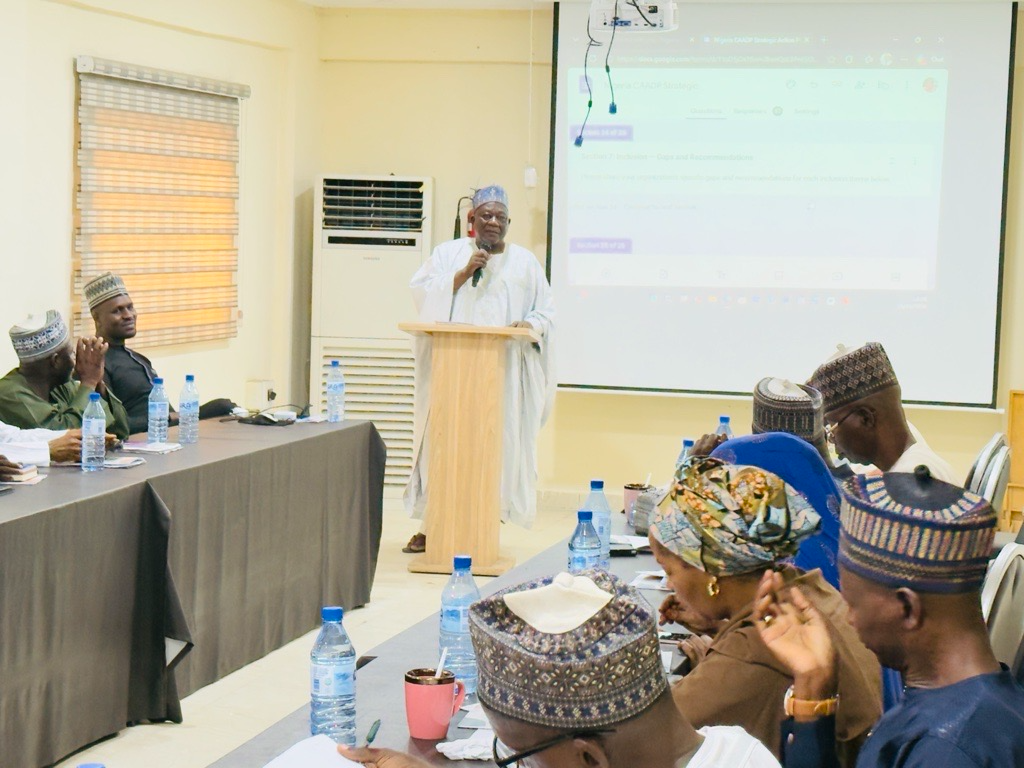
Photo credit: Adetunji Fasoranti
Travel north and the picture shifts. The North Central is Nigeria's staple-crop heartland of sorghum, yam, cassava and rice. The region has active civil society engagements, which have helped produce Nigeria's first national agroecology strategy, actively monitor agricultural budgets, and have long pushed for the land and gender reforms that other regions are only beginning to name. However, its defining problem is the farmer-herder conflict that disrupts production across the Middle Belt, requiring conflict-sensitive programming that no single ministry can deliver alone.
Further northeast, the conversation takes on a different weight. The North-East is where climate stress and insecurity converge most brutally, producing one of West Africa's largest displaced populations. Here, agricultural planning has to answer a prior question before it can talk about yields: how do you farm when you have lost your land, your tools and your community? In this zone, cluster farming for displaced people is not a relief measure but the core recovery strategy.
The North-West is Nigeria's irrigated grain belt, with serious dry-season capacity and busy commodity corridors. Yet some states record child stunting rates above 55 percent. The region grows food that leaves, while the people who grow it often cannot afford a healthy diet. Norms of purdah add a distinct layer of exclusion for women who cannot travel to training venues, move freely in markets, or access extension services delivered the conventional way. This points to the need for gender-responsive extension that reaches women where they are.
The South-East and South-South may hold the widest gap between potential and reality. High agricultural biodiversity, proximity to ports, active nutrition programs and an inventive smart-school-farm model coexist with oil-polluted farmland, seasonal flooding, coastal erosion and agro-industrial plants left idle for decades. In the Niger Delta, environmental challenges are central to agricultural productivity and food security outcomes, with oil-contaminated farmland framed not as an environmental side-issue but as a food-security problem demanding targeted remediation.
Where the whole country agrees
Despite regional variation, several common issues were identified. Post-harvest losses of 30 to 50 percent for perishable crops surface everywhere, the predictable result of bad roads, thin storage and an almost absent cold chain. High interest rates and land-based collateral lock women and youth out of formal finance in every zone. And awareness of CAADP itself, the framework underpinning the entire plan, is close to zero at state and local-government level, which quietly undercuts everything else.
Above all, one reform was named as the single highest-leverage change Nigeria could make: giving women the legal right to own, inherit and use land as collateral. The Land Use Act, which vests land in government and leaves customary practice to do the rest, systematically denies women the asset that unlocks credit, insurance, extension and markets. Without reform, stakeholders argued that no financing product, training program or market linkage reaches its full potential. Community-level changes in attitudes are needed too, but the Act is the structural starting point everywhere.
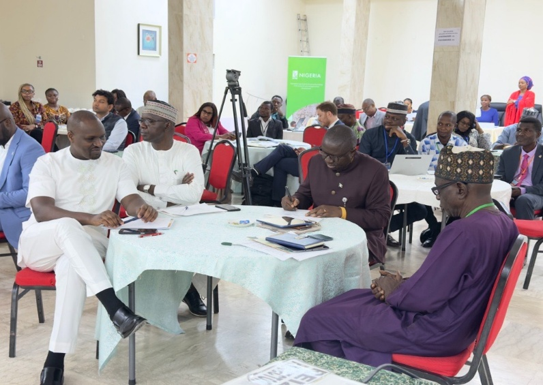
Photo credit: Adetunji Fasoranti
National level priorities
The federal consultation focused on what requires national coordination and regulation, and it surfaced concerns the regions had not foregrounded.
On governance, participants treated the non-implementation of policy as a major gap in its own right and called for named coordinating ministries to be made responsible for coherence across tiers of government. The regions had asked for coordination mechanisms; the national table asked for someone to be accountable when they fail.
Food safety was also emphasized, particularly the need to address harmful chemical use and strengthen regulatory oversight. This is a problem for national regulatory capacity, not regional programming. The livestock sector was likewise elevated from a passing mention into a priority of its own: drought-resistant breeds, quality regulation, and strategic reserves.
Priority actions for 2026–2028
Of the many recommendations generated across the consultations, a handful earned the strongest cross-regional consensus as immediate priorities for 2026–2028:
- Reform the Land Use Act so women can own, inherit and use land as collateral, the reform stakeholders ranked above all others.
- Appoint CAADP focal points in all 36 states and the Federal Capital Territory, with real roles and real budgets.
- Anchor school feeding in law so the Home-Grown School Feeding Program survives budget cycles and changes of government.
- Release agricultural budgets on time so plans do not stall and investors do not lose confidence.
- Run an awareness campaign on the Kampala Declaration given that the framework behind the entire plan is largely unknown to the very officials meant to deliver it.
A plan built from the ground up
Nigeria's Strategic Action Plan now has something rare in African agricultural policy: a bottom-up evidence base, built from voices in every geopolitical zone and tested at the federal level, without collapsing regional differences into a single national narrative. The harder task begins now. The plan's financing, governance and delivery systems will have to be flexible enough to address Nigeria’s distinct conditions.
The question the consultations set out to answer, what will it take to feed Nigeria by 2035, turns out to have no single answer. It will take cold rooms in some places and ceasefires in others, land reform almost everywhere, and a continental framework that finally becomes known to the people expected to deliver it. The benefit of the consultative approach is that the plan now reflects these differences more clearly.
This article draws on the National and Regional Stakeholder Consultation Report prepared for the Nigeria CAADP Strategic Action Plan 2026 to 2035 by the International Food Policy Research Institute (IFPRI) in Nigeria.
Acknowledgement
The National Stakeholder Consultation Workshop received some financial support from the Food Security Portal of the International Food Policy Research Institute (IFPRI). The authors gratefully acknowledge this contribution.