Photo credit: Mariam Ajadee
Background
School feeding is a social protection intervention whose impact cuts across several dimensions of child wellbeing, including nutrition, health, schooling, and learning outcomes. It can also serve as a means of livelihood when designed in a way that connects with the local economy.
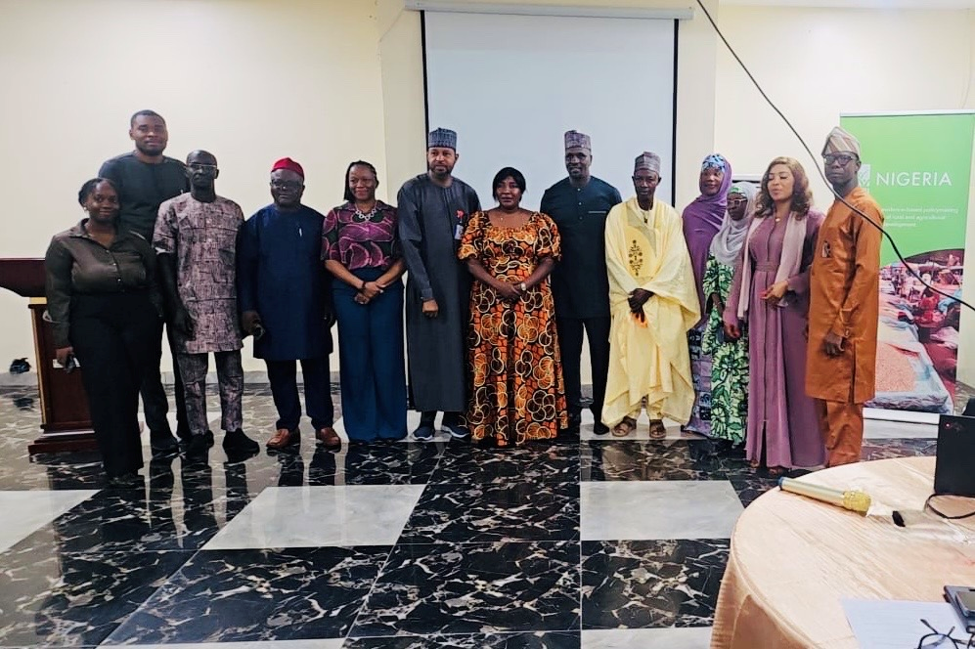
On August 12, 2026, the International Food Policy Research Institute (IFPRI) – Nigeria, in collaboration with the United Nations World Food Programme (WFP), hosted a stakeholder consultation workshop in Abuja to assess Nigeria’s readiness to scale sustainable, accountable, and home-grown school feeding. The workshop brought together key actors in Nigeria’s school feeding system, including, representative from the Renewed Hope National Home-Grown School Feeding Programme (RH-NHGSFP), development partners working on school feeding-related projects in parts of Nigeria, and state programme managers from six states and the Federal Capital Territory (FCT). The states represented in the workshop were Adamawa, Akwa Ibom, Enugu, Kano, Kebbi, and Zamfara
The consultation forms part of IFPRI’s ongoing project on the institutional readiness assessment of school feeding in Nigeria. It provided an opportunity to understand the experiences and current realities of school feeding in the country and set the stage for the assessment, which will examine five key areas:
- Legal and policy environment
- Coordination
- Financing
- Procurement, and
- Accountability.
Lessons from the National Home-Grown School Feeding Programme
In the first round of discussions, programme managers from states and the FCT each shared their experiences of the Home-Grown School Feeding Programme (HGSFP) since its inception, including what worked, the challenges they encountered, and the achievements recorded in their states. Nearly all the states shared similar success stories, particularly in the number of pupils reached and how the programme contributed to increased school enrolment and attendance.
At the same time, several challenges were identified, including:
- Gaps in monitoring and evaluation
- Inadequate or delayed funding
- Weaknesses in measuring programme outcomes
- Limited evidence on improvements in learning and nutrition
- A stronger focus on outputs, such as the number of pupils reached, than outcomes
In their second presentations, the programme managers reflected on sustainability strategies for their respective states. Drawing on their implementation experiences, they proposed solutions ranging from strengthening the legal and policy framework to improving implementation, monitoring, and accountability. This shifted the conversation from what went wrong in the past to what could be done differently as Nigeria considers the future of school feeding.
Current Reality of the NHGSFP
The discussion also focused on the status of school feeding since the suspension of the NHGSFP, and the National government’s earlier commitment to revive the programme. At the time of the consultation, participants reported that only two of the represented states, Zamfara and Kebbi, had ongoing school feeding programmes financed by their respective state governments. Other participating states indicated that they were awaiting further communication from the federal government before resuming activities under the national programme. Thus, participants raised concerns about limited communication between national and state actors on the implementation of the NHGSFP, leaving states uncertain about the programme’s direction and their role in its implementation.
Building a Sustainable Programme
The perspectives shared by stakeholders reinforced the need to build a school feeding programme that can be sustained beyond individual administration and changes in government.
The discussion highlighted several issues that need attention:
- Sustainability: School feeding programmes need stronger institutional foundations so that they are not discontinued when administrations change.
- Targeting: School feeding should clearly identify the children who need it most particularly in locations where the number of out of school children is high.
- Clear objectives: Programmes at both federal and state levels need clearly defined objectives against which progress and outcomes can be measured.
- Financing: There must be mechanisms to ensure that funds are allocated to school feeding, and these funds should be released, tracked, and used for their intended purpose.
- Coordination: Clear roles and responsibilities are needed across federal and state governments, programme managers, development partners, and other stakeholders.
Moving Forward
IFPRI-Nigeria’s goal is to help bridge these gaps by providing evidence and practical solutions that can support states and the national government in designing a school feeding programme that is sustainable and scalable.
The stakeholder consultation provided several important lessons that will inform the development of a priority action plan, that identifies the key institutional reforms and actions needed to strengthen school feeding in Nigeria. some of these include:
- Clarifying roles and responsibilities: There is a need to clearly define the roles of federal and state governments, particularly around financing, programme implementation, monitoring, procurement, and accountability.
One recommendation from the discussion was for the national government to formally communicate with states and clarify that the states with the capacity and resources to design and implement their own school feeding activities can proceed.
2. Closing the data and evidence gaps: To make a compelling case for government investment in school feeding, there must be credible evidence on the returns to such investment. The assessment will therefore examine:
- What should be monitored and measured
- The data required to track progress
- How baseline evidence can be established
- How outcomes can be tracked over time
- How evidence can inform programme decisions
3. Strengthen communication and coordination: Better coordination cannot happen without regular communication between national and state governments, programme managers, development partners, and other stakeholders.
Periodic meetings, consultations, and workshops can provide a platform for actors to share updates, address emerging challenges, and maintain a common understanding of the direction of the programme.
Conclusion
The stakeholder consultation highlighted that reviving school feeding in Nigeria will require more than restarting the programme or expanding the number of pupils receiving meals. The experience of the NHGSFP shows that sustainability depends on the systems behind the meals: clear roles, reliable financing, effective coordination, strong procurement and monitoring systems, accountability, and evidence to demonstrate results.
The institutional readiness assessment will bring these elements together to identify the strengths and gaps in Nigeria’s current school feeding system and provide a practical basis for building a programme that is sustainable, accountable, scalable, and responsive to Nigeria’s realities.
Authors: Ebuka Orjiakor, Oliver Kirui, Chibuzo Nwagboso, Mariam Ajadee, and Bedru Balana